|
|
|
eBook/Digital Version available from:
|
 Score: 99
 |
 |
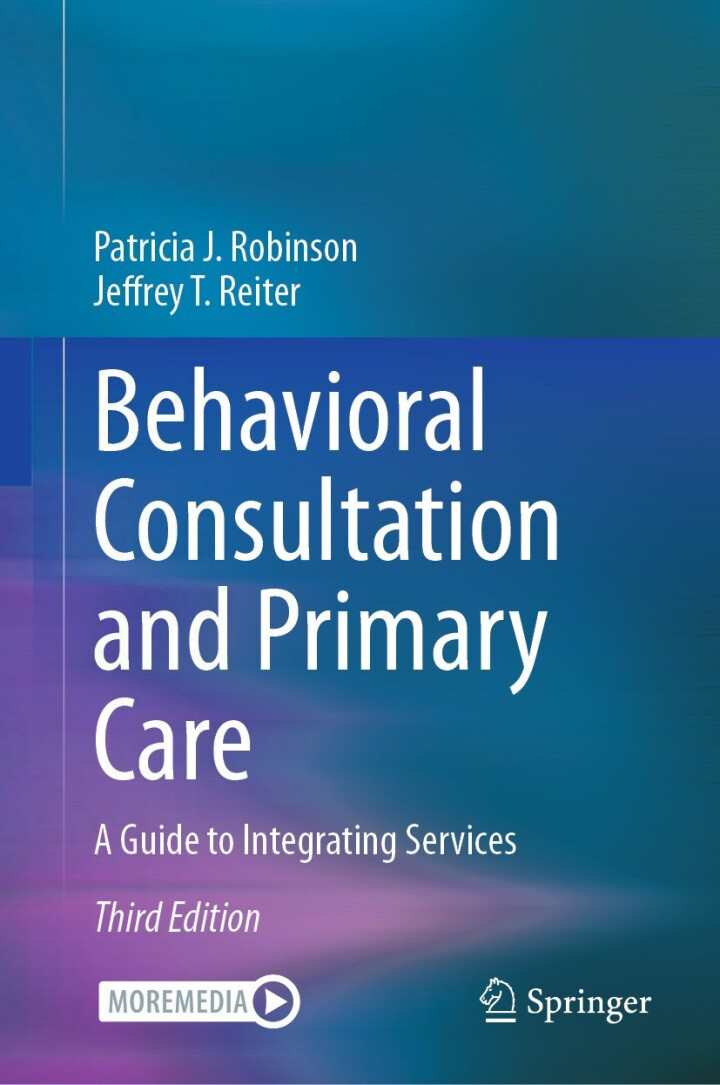
| Behavioral Consultation and Primary Care: A Guide to Integrating Services, 3rd Edition |
|
ISBN: 978-3031721496,
426 pages,
Hard Cover
ISBN-10: 3031721497 |
|
| Copyright: |
2025 |
|
| Edition: |
3rd |
|
| Author: |
Robinson, Patricia J., PhD; Reiter, Jeffrey T., PhD, ABPP |
|
|
Specialties:
|
Psychology, Clinical
, Family Medicine
, Primary Care |
|
| Publisher: |
Springer |
|
| List Price: |
$139.99 |
|
| Google: |
|
|
|
|
|
|
|
At A Glance
|
This third edition of Behavioral Consultation and Primary Care builds on the success of the previous editions, with updates and expansions of material. This volume will address many timely developments and will be useful to those professionals new to integrated care, and will serve as a text for the growing number of graduate courses on primary care consultation. Topics of interest include workforce shortage issues, guidance on growing strong and resilient teams, and an exploration of the spread of this model to a wide variety of settings such as family practice, women's clinics, and pediatric facilities. In all, the goal of this book is to provide better health care for everyone, and provide the steps necessary to achieve this goal.
|
|
Reviewer:
|
Linda Myerholtz,
PhD
(University of North Carolina School of Medicine)
|
|
|
Range
|
Question
|
Score
|
| 1-10 |
Are the author's objectives met? |
10 |
| 1-10 |
Rate the worthiness of those objectives. |
10 |
| 1-5 |
Is this written at an appropriate level? |
5 |
| 1-5 |
Is there significant duplication? (1=significant, 5=insignificant) |
5 |
| 1-5 |
Are there significant omissions? (1=significant, 5=insignificant) |
5 |
| 1-5 |
Rate the authority of the authors. |
5 |
| 1-5 |
Are there sufficient illustrations? |
5 |
| 1-5 |
Rate the pedagogic value of the illustrations. |
5 |
| 1-5 |
Rate the print quality of the illustrations. |
4 |
| 1-5 |
Are there sufficient references? |
5 |
| 1-5 |
Rate the currency of the references. |
5 |
| 1-5 |
Rate the pertinence of the references. |
5 |
| 1-5 |
Rate the helpfulness of the index. |
5 |
| 1-5 |
If important in this specialty, rate the physical appearance of the book |
N/A |
| 1-10 |
Is this a worthwhile contribution to the field? |
10 |
| 1-10 |
If this is a 2nd or later edition, is this new edition needed? |
10 |
|
|
|
Reviewer:
|
Linda Myerholtz,
PhD
(University of North Carolina School of Medicine)
|
|
|
Description
|
| This book serves as a comprehensive guide to implementing the Primary Care Behavioral Health (PCBH) model of integrated behavioral health care. This edition updates the empirical evidence supporting this model and expands training resources. The book includes practical guidance and links to online resources including videos, training materials, and patient handouts. Previous editions were published in 2007 and 2016. |
|
|
Purpose
|
| The PCBH model of integrated care is one of the most widely studied models and major healthcare systems including the Veteran's Administration have adopted it. This book provides an overview of the model, important background information for system leaders, and practical "how to" information for implementing this model in primary care settings. There is a strong emphasis on training for all team members. Research has shown that well planned implementation of a PCBH program is critical to successful outcomes, and this book walks the audience through this process in a clear and accessible manner. |
|
|
Audience
|
| The book addresses the learning needs of the primary care team, including new and experienced behavioral health consultants, clinic staff, primary care providers, and healthcare leaders. It may also be used to train graduate students in integrated care. The practical approach and expanded sections on advanced behavioral health care skills and leadership provide guidance for both newcomers to PCBH and experienced clinicians and trainers. The authors are internationally known experts in integrated behavioral health care, have extensive experience working within this model, and provide training and consultation to organizations implementing PCBH. |
|
|
Features
|
| The book is divided into six sections: an introduction to PCBH and primary care; building the PCBH team; core competencies for PCBH team members; tools, training, and resources for new behavioral health consultants; resources for experienced or advanced behavioral health consultants; and real-life tips and FAQs for implementing PCBH. The book includes online resources such as video clips demonstrating specific PCBH skills (e.g., a warm handoff, consultation with a primary care provider, sample clinical interventions), a sample PCBH program manual, training slides, and core competency assessment tools. Clear tables and graphics illustrate and summarize key elements, which can also be used for training team members. A particularly helpful tool for newly established programs is the BHC Start-Up Checklist (Chapter 8), which lays out a week-by-week plan for implementation. It includes practical tools such as agendas for meetings with clinic leaders, scripts for communicating with primary care providers, and tips for addressing implementation barriers. There is also a new section describing the role of a "care extender" in the PCBH model. Each chapter ends with key learning points and supporting references. |
|
|
Assessment
|
| The book offers a carefully crafted practical "how-to" guide for implementing the PCBH model. It addresses the needs of the entire clinic team, including leadership, primary care clinicians, support staff, and behavioral health consultants. It is well-organized and includes numerous valuable tools that can be easily adapted to any clinical system. This third edition incorporates updated information on the evolution of the PCBH model over the past 17 years, a wealth of training resources with an emphasis on core competencies for team members, updated patient handouts, and a toolkit for using Focused Acceptance and Commitment Therapy in PCBH consultations. This book should be required reading for anyone considering implementing PCBH or facing implementation barriers. The tools and guides presented will streamline the implementation process, minimize the need to "reinvent the wheel," and set programs up for success. |
|
|
|
|
|
|
|
|