|
|
|
eBook/Digital Version available from:
|
 Score: 92 |
 |
| Atlas of Trauma Surgery |
|
ISBN: 978-1-264-25842-0,
291 pages,
Hard Cover
ISBN-10: 1-264-25842-9 |
|
| Copyright: |
2026 |
|
| Edition: |
1st |
|
| Editor: |
Dangleben, Dale A., MD, FACS; Madbak, Firas G., MD, FACS, FCCM |
|
|
Specialties:
|
Trauma Surgery |
|
| Publisher: |
McGraw Hill |
|
1325 Avenue of Americas, 7th Floor |
|
New York, NY 10019 |
|
UNITED STATES |
|
P: 800-338-3987
F: 800-953-8691 |
|
http://www.mhprofessional.com/medical |
|
| List Price: |
$149.00 |
|
| Google: |
|
|
|
|
|
|
|
At A Glance
|
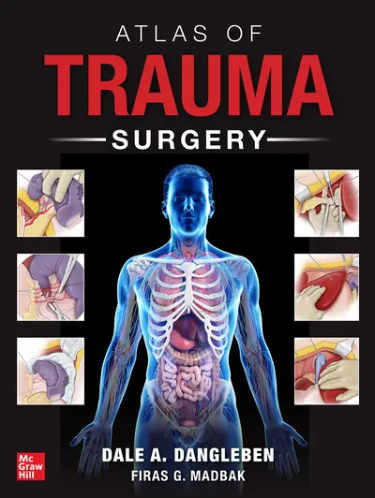
An illustrated, invaluable guide to surgical techniques and management in trauma. The Atlas of Trauma Surgery is a high-yield, step-by-step guide to commonly performed surgeries in trauma and acute care settings. Concise, templated chapters detail operative indications, tips and tricks, post operative considerations, complications, and follow-up care. Much more than a compilation of procedures, the Atlas serves as a visual narrative of surgical decision-making in trauma, drawn from real- world experience and designed for clarity and immediate application in the operating room. With an emphasis on operative steps and patient management, this is an ideal resource for trauma surgeons as well as general surgeons, vascular surgeons, and orthopedic surgeons.
|
|
Reviewer:
|
David Dries,
MSE, MD
(Regions Hospital)
|
|
|
Range
|
Question
|
Score
|
| 1-10 |
Are the author's objectives met? |
10 |
| 1-10 |
Rate the worthiness of those objectives. |
10 |
| 1-5 |
Is this written at an appropriate level? |
5 |
| 1-5 |
Is there significant duplication? (1=significant, 5=insignificant) |
4 |
| 1-5 |
Are there significant omissions? (1=significant, 5=insignificant) |
5 |
| 1-5 |
Rate the authority of the authors. |
5 |
| 1-5 |
Are there sufficient illustrations? |
5 |
| 1-5 |
Rate the pedagogic value of the illustrations. |
5 |
| 1-5 |
Rate the print quality of the illustrations. |
5 |
| 1-5 |
Are there sufficient references? |
3 |
| 1-5 |
Rate the currency of the references. |
3 |
| 1-5 |
Rate the pertinence of the references. |
3 |
| 1-5 |
Rate the helpfulness of the index. |
5 |
| 1-5 |
If important in this specialty, rate the physical appearance of the book |
5 |
| 1-10 |
Is this a worthwhile contribution to the field? |
10 |
| 1-10 |
If this is a 2nd or later edition, is this new edition needed? |
N/A |
|
|
|
Reviewer:
|
David Dries,
MSE, MD
(Regions Hospital)
|
|
|
Description
|
| This book is a beautiful atlas of relevant general surgery anatomy and procedures for trauma. It is a step-by-step guide to commonly performed procedures in trauma and acute care. The chapters are concise, providing details of operative indications and procedures while also reporting potential complications. |
|
|
Purpose
|
| This atlas is designed as a visual narrative of decision-making in key procedures in acute surgery or trauma. There is emphasis on a step-by-step approach to operative procedures. |
|
|
Audience
|
| The book is designed as a resource for various personnel with the ability to provide management expertise in trauma care. This includes general surgeons, vascular surgeons, orthopedic surgeons, and related anesthesia personnel. Students, residents, and other practitioners in training are an appropriate audience as well. Contributing writers originate from designated trauma centers and a wide range of academic programs in the United States. |
|
|
Features
|
| Clinical topics described in this book follow an anatomic pattern. For example, initial chapters describe neurosurgical interventions about the head and neck including craniotomy, monitors for intracranial pressure, anatomic approaches to access the head and neck, and vascular topics such as the carotid artery and the jugular vein. Subsequent presentations move into the thorax with a review of approaches to the subclavian artery, the use of vein grafts, repair of the thoracic aorta, and cardiac trauma. Thoracic topics include commentary on lung injury, approaches to the airway and management of rib fractures. Reconstructive procedures including use of the stomach are described as part of esophageal repairs. The book discusses a number of approaches relevant to the repair of the diaphragm. It also reviews repair of abdominal organs including the stomach, duodenum, spleen, and hepatobiliary organs. Abdominal topics include injury to the small intestine, colorectal system, and pancreas. The book briefly describes renal trauma and advocates for conservative care approaches. Concluding chapters describe approaches to injuries of the ureter and bladder along with the use of a retroperitoneal approach to vascular injury in the pelvis. Concluding chapters describe the damage control approach to the open abdomen after injury. In addition to anatomy, the book reviews fluid resuscitation strategy. Chapters include multiple multicolored drawings to support the work of trauma personnel. In addition to excellent illustrations, each chapter provides a relevant narrative. Presentations are clear and effective. The book makes minimal use of references but includes an excellent index with separate contributions for various illustrations. Additional references would help further advance this as an effectively designed teaching tool for providers in acute care. |
|
|
Assessment
|
| This trauma atlas is a valuable tool for trauma providers with all degrees of sophistication. The book offers readers a sequential anatomic approach to each trauma repair presented. Its strengths are its excellent illustrations and narrative contributions supported by data. This book is a very worthy tool for clinicians working in a difficult setting. |
|
|
|
|
|
|
|
|