|
|
|
eBook/Digital Version available from:
|
 Score: 86
 |
 |
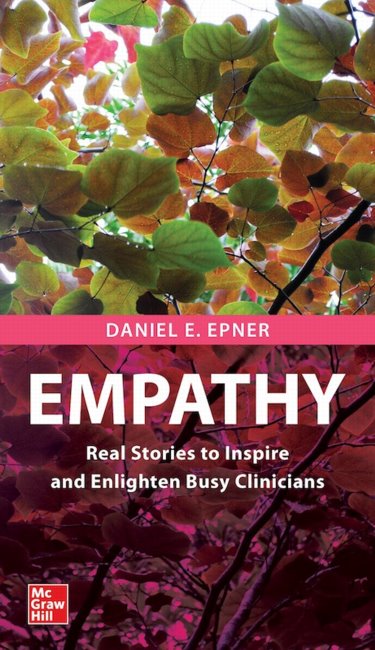
| Empathy: Real Stories to Inspire and Enlighten Busy Clinicians |
|
ISBN: 978-1-260-47341-4,
251 pages,
Soft Cover
ISBN-10: 1-260-47341-4 |
|
| Copyright: |
2022 |
|
| Edition: |
1st |
|
| Editor: |
Epner, Daniel E., MD, FACP |
|
|
Specialties:
|
Medical Education & Informatics
, Hospice & Palliative Care |
|
| Publisher: |
McGraw Hill |
|
1325 Avenue of Americas, 7th Floor |
|
New York, NY 10019 |
|
UNITED STATES |
|
P: 800-338-3987
F: 800-953-8691 |
|
http://www.mhprofessional.com/medical |
|
| List Price: |
$50.00 |
|
| Google: |
|
|
|
|
|
|
|
At A Glance
|
The Clinician's Guide to Empathy helps you approach tough conversations with patients in a new, more effective way by understanding and recognizing their emotion and perspective, and then communicating that recognition clearly and without fear. The authors define empathy on an operational level rather than a theoretical, scientific, or conceptual level and provide the actionable advice you need to make empathy the central focus when faced with denial, questions about prognosis, existential concerns, difficult family dynamics, anger, and nonmedical opiate use. Each chapter, authored by an experienced expert in their field, is anchored by a story that clearly illustrated how empathy can unfold in the clinical setting. Vignettes throughout provide sample dialogue and specific examples of actual words to use in specific situations. Trained to solve problems, clinicians often have difficulty expressing empathy to their patients. This guide provides a new way of approaching that problem not as a technician but as a fellow human being. Much more than a guide to breaking bad news or a brief overview of all communication skills, is a must read for almost anyone connected to the healthcare industry. Learn more and order here.
|
|
Reviewer:
|
John Kotula,
MD
(Johns Hopkins All Children's Hospital)
|
|
|
Range
|
Question
|
Score
|
| 1-10 |
Are the author's objectives met? |
10 |
| 1-10 |
Rate the worthiness of those objectives. |
10 |
| 1-5 |
Is this written at an appropriate level? |
5 |
| 1-5 |
Is there significant duplication? (1=significant, 5=insignificant) |
3 |
| 1-5 |
Are there significant omissions? (1=significant, 5=insignificant) |
5 |
| 1-5 |
Rate the authority of the authors. |
5 |
| 1-5 |
Are there sufficient illustrations? |
N/A |
| 1-5 |
Rate the pedagogic value of the illustrations. |
N/A |
| 1-5 |
Rate the print quality of the illustrations. |
N/A |
| 1-5 |
Are there sufficient references? |
5 |
| 1-5 |
Rate the currency of the references. |
3 |
| 1-5 |
Rate the pertinence of the references. |
3 |
| 1-5 |
Rate the helpfulness of the index. |
3 |
| 1-5 |
If important in this specialty, rate the physical appearance of the book |
N/A |
| 1-10 |
Is this a worthwhile contribution to the field? |
8 |
| 1-10 |
If this is a 2nd or later edition, is this new edition needed? |
N/A |
|
|
|
Reviewer:
|
John Kotula,
MD
(Johns Hopkins All Children's Hospital)
|
|
|
Description
|
| Clinical medicine often involves difficult conversations with patients, but these interactions also serve as a source of stress and anxiety for clinicians. Conducting these conversations in an empathetic manner leaves both patients and clinicians with better care. This book illustrates empathetic clinical conversations using end-of-life care, cancer treatment, and substance abuse narratives, then follows each story with a bulleted list of key points, empathic responses, and empathic actions. |
|
|
Purpose
|
| Stories are the crux of clinical medicine. Accordingly, this book uses the power of narratives to show how experts in their fields can offer empathy to patients. In medicine, it is important to place the wants and needs of the patient at the center of the clinical encounter. |
|
|
Audience
|
| The audience includes clinicians, particularly those who see patients frequently. This book is useful for medical students through attending physicians, as well as allied healthcare professionals. It also provides case discussions of empathic approaches to difficult conversations, which is relevant to students in medical humanities courses. |
|
|
Features
|
| The core structure of the book consists of 16 narratives of difficult patient conversations/encounters described by the clinicians who cared for each patient. Each case begins with an introduction and preface, and ends with a brief description of key points and examples of empathic expressions and actions. The last chapter provides a structured guide to approaching different types of patient encounters. |
|
|
Assessment
|
| This lovely book is applicable to many different settings and allows for reading in short snippets. The stories not only provide examples of empathy within patient encounters, but also help to remind busy clinicians that we are not alone in our struggles with this difficult, yet deeply rewarding central tenet of medicine. Medicine is ultimately stories, and this book brings them front and center. |
|
|
|
|
|
|
|
|