|
|
|
eBook/Digital Version available from:
|
 Score: 96
 |
 |
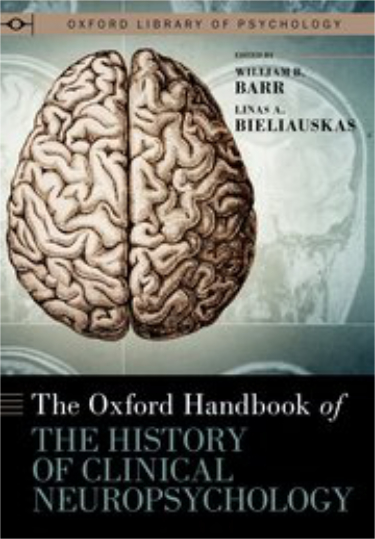
| The Oxford Handbook of the History of Clinical Neuropsychology |
|
ISBN: 978-0-19-976568-3,
1247 pages,
Hard Cover
ISBN-10: 0-19-976568-5 |
|
| Copyright: |
2024 |
|
| Edition: |
1st |
|
| Editor: |
Barr, William B.; Bieliauskas, Linas A. |
|
|
Specialties:
|
Psychology, Clinical
, Psychiatry
, History of Medicine |
|
| Publisher: |
Oxford University Press |
|
| Series Title: |
Oxford Library of Psychology |
|
| List Price: |
$270.00 |
|
| Google: |
|
|
|
|
|
|
|
At A Glance
|
While its origins date back to the 19th Century, the field of clinical neuropsychology has existed as a distinct discipline for less than 60 years. The Oxford Handbook of the History of Neuropsychology tells this story of how neuropsychology has evolved to its present state and where is it going. This comprehensive volume begins with chapters reviewing the history of neuropsychologys approaches to disorders of attention, language, memory, and other conditions. Other chapters focus on the origins of neuropsychologys methods including neuropsychological testing, brain imaging, and studies of laterality including the Wada test. While this volume has a number of chapters covering regional developments in clinical neuropsychology as a profession in the United States, it is one of the first volumes to provide additional chapters on development of neuropsychology across different countries. This Handbook gathers the work of experts in the field to provide extensive coverage of theorigins of neuropsychologys methods and its approach to various clinical conditions across the globe.
|
|
Reviewer:
|
Michael Easton,
MD
(Rush University Medical Center)
|
|
|
Range
|
Question
|
Score
|
| 1-10 |
Are the author's objectives met? |
10 |
| 1-10 |
Rate the worthiness of those objectives. |
10 |
| 1-5 |
Is this written at an appropriate level? |
5 |
| 1-5 |
Is there significant duplication? (1=significant, 5=insignificant) |
5 |
| 1-5 |
Are there significant omissions? (1=significant, 5=insignificant) |
4 |
| 1-5 |
Rate the authority of the authors. |
5 |
| 1-5 |
Are there sufficient illustrations? |
N/A |
| 1-5 |
Rate the pedagogic value of the illustrations. |
N/A |
| 1-5 |
Rate the print quality of the illustrations. |
N/A |
| 1-5 |
Are there sufficient references? |
5 |
| 1-5 |
Rate the currency of the references. |
4 |
| 1-5 |
Rate the pertinence of the references. |
4 |
| 1-5 |
Rate the helpfulness of the index. |
5 |
| 1-5 |
If important in this specialty, rate the physical appearance of the book |
N/A |
| 1-10 |
Is this a worthwhile contribution to the field? |
10 |
| 1-10 |
If this is a 2nd or later edition, is this new edition needed? |
N/A |
|
|
|
Reviewer:
|
Michael Easton,
MD
(Rush University Medical Center)
|
|
|
Description
|
| This book brings together numerous international experts to provide an historical perspective regarding the development of neuropsychiatry as well as the methods and approaches to evaluating a wide variety of clinical conditions. |
|
|
Purpose
|
| Questions about the brain and behavior date back centuries. This is the first book, developed over many years, to bring together an international perspective on the historical development of neuropsychiatry. It is one of the first books to examine the development of neuropsychiatry across different countries. |
|
|
Audience
|
| The book is intended for anyone in the field or interested in behavioral neuropsychiatry. It aims to be a comprehensive book covering the historical development of neuropsychiatry from scientific, clinical, and professional perspectives. The hope is for the continued global growth of the field, developing methods that can be applied across populations and cultures. |
|
|
Features
|
| The book is over 1000 pages and consists of 45 chapters divided into six sections. It takes an historical approach, covering various disorders, including those related to language and memory. Each chapter starts with an abstract of its contents. Initial chapters examine the history of basic neuropsychiatric disorders such as aphasia, apraxia, attention, and symmetry. The following sections review the history of the most common neuropsychiatric tests and procedures, brain imaging and laterality. The book then reviews the historical development of the field across the globe and the Americas. The fifth section looks at the history and development of specialty fields such as epilepsy, cognitive rehabilitation, and frontal lobe functioning. The final section looks at people and events relevant to the development of clinical neuropsychology as a profession. |
|
|
Assessment
|
| This book is a comprehensive historical overview regarding the development of clinical neuropsychiatry. It provides extensive coverage of the origins of neuropsychiatry's methods and approaches to various clinical conditions. The book also acknowledges that some testing and conceptualizations are based on old theories, which require continued evolution. This is an exceptionally detailed reference book on the historical development of neuropsychiatry and will provide readers with a better perspective on its theories, methodologies, and current day testing. Anyone in the field will benefit from this book being part of their library. |
|
|
|
|
|
|
|
|